
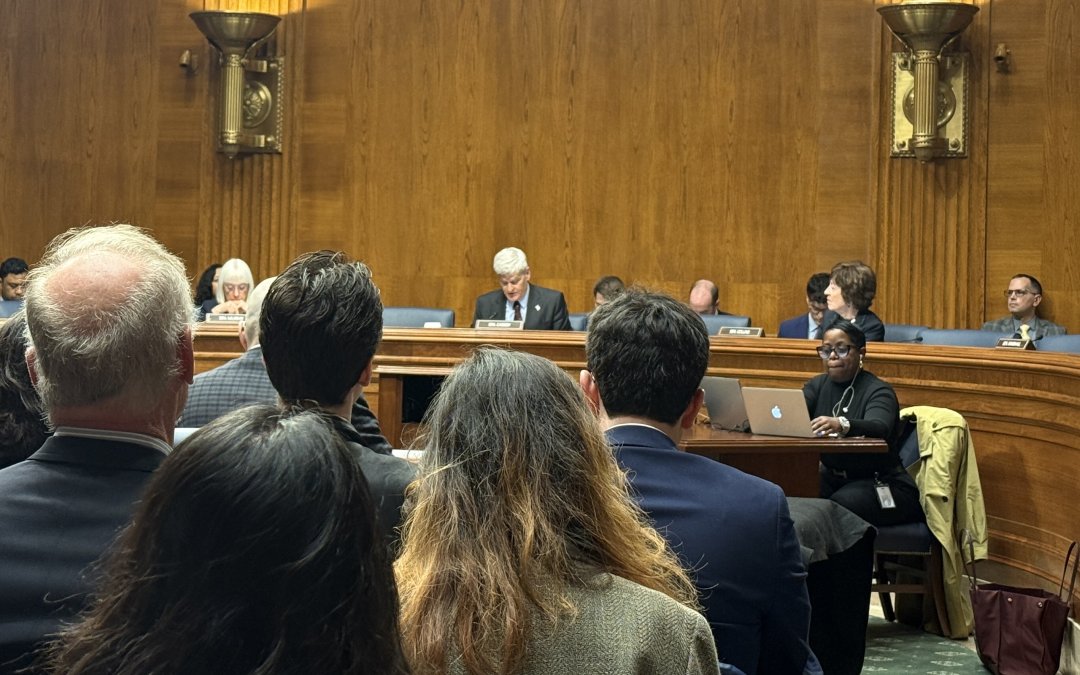
WASHINGTON — In a debate over the exploitation of American universities by foreign governments, the Senate Committee on Health, Education, Labor, and Pensions examined what lawmakers described as a “critical national security vulnerability” at Thursday’s hearing.
Republicans argued that foreign governments, particularly China, are giving money to American universities to gain access to sensitive research, intellectual property and political influence on campuses. Democrats warned that while transparency and oversight are necessary, overly restrictive policies could undermine international academic collaboration and exaggerate the scale of the threat.
“We cannot be naive. There are times when the money serves allegedly as cover to infiltrate universities to steal research and talent and to foment anti-American ideology,” said Sen. Bill Cassidy, R-La., the committee’s chairman. “This is a national security concern and requires federal legislation.”
Senators discussed potential ways to increase transparency and oversight of universities’ reporting of foreign gifts and contracts.
Sen. Andy Kim, D-N.J., questioned witnesses on whether Congress should fully cut off academic ties with Chinese institutions and researchers.
“I don’t think you have to throw the baby out with the bath water, but I do think much more stringent restrictions need to be enacted here,” said Craig Singleton, a senior fellow at the Foundation for Defense of Democracies.
However, Kim warned that completely cutting off ties with Chinese universities could have negative effects on research and academia. He worried about the “presumption of concern upon people of Asian descent, people of descent of other countries that we are raising suspicion about.”
“The Asian American community has raised significant concerns about this,” he said. “I just want us to be knowledgeable about these broader knock-on effects that can cascade and very much affect not just the health of our universities and our research partnerships but also…the signal that it sends to the diversity of different communities in America.”
Republican senators countered that the scale of foreign funding demands strong action.
“Foreign government influence in our universities is gaining traction through these large, obscene gifts or grants,” Sen. Ashley Moody, R-Fla., said.
Federal data shows that China has contributed roughly $6.8 billion in gifts and contracts to American universities over time. Universities also reported about $400 million in transactions involving entities on U.S. government watchlists or restricted entity lists that pose threats to national security, foreign policy interests or public safety.
Peter Wood, president of the National Association of Scholars, pointed out that incomplete reporting by universities has made it difficult for lawmakers and the public to fully understand the scale and purpose of foreign funding.
At the center of the legislative debate was the proposed Defending Education Transparency and Ending Rogue Regimes Engaging in Nefarious Transactions (DETERRENT) Act, which would require universities to report foreign gifts greater than $50,000. It would change Section 117 of the Higher Education Act of 1965, which already requires universities to report gifts above $250,000 to the Department of Education.
Senator Patty Murray, D-Wash., said she worried about adding more responsibilities to a “dismantled” Department of Education by changing the reporting system.
“I’m pretty troubled that we’re having this hearing today to add even more responsibilities to the Department of Education when we still in this committee have not had Secretary (Linda) McMahon before us to answer some really serious questions about what she is doing right now which is an illegal scheme to dismantle the Department of Education,” said Murray.
She also expressed concern over the new shared oversight of foreign gifts and contracts between the Department of Education and the Department of State. It’s “part of its broader effort to dismantle the Department of Education,” and that it would make compliance more complicated for universities.
Cassidy closed the hearing by thanking President Donald Trump for his action on the issue and said passing the DETERRENT Act is the next step to close loopholes and increase transparency to Congress, intelligence agencies and the public, thereby increasing accountability.
DETERRENT was received in the Senate, read twice, and referred to the committee in late March. There is no vote scheduled on the bill as of yet.