
WASHINGTON – After the Affordable Care Act enhanced premium tax credits expired on Jan. 1, Rena Bumbray-Graves and her husband could no longer afford their health insurance, so they dropped their plan.
Bumbray-Graves, a home care worker and member of the Service Employees International Union, said her husband will receive health insurance through his job starting in February. She said it is too expensive to add her to the plan, so she remains uninsured as she pursues other options.
Bumbray-Graves spoke at a House Budget Committee hearing on Wednesday, where Republicans and Democrats agreed that they must fight rising health care costs facing Americans, but struggled to find a consensus on solutions. Representatives also acknowledged the negative impacts of health care spending on the federal budget and the need to address market consolidation.
With the expiration of the ACA tax credits on Jan. 1, millions of Americans face a significant increase in premium payments for their health care. In June 2024, the Congressional Budget Office sent a letter to House Republicans estimating that from 2026 through 2034, 3.8 million people on average would become uninsured each year without the continuation of the credits.
The expiration of the credits was a major sticking point for Democrats in last year’s government shutdown, which was the longest in U.S. history at 43 days. Democrats hoped to save the ACA’s premium tax credits but were unable to convince their Republican counterparts to extend them.
“I work in health care, and I can’t afford health insurance… please bring back these tax credits so that I can get my health care back,” Bumbray-Graves said during her testimony.
Committee Chair Rep. Jodey Arrington, R-Texas, criticized Democrats for going “all in on government-run health care” and said more subsidies, regulations and mandates will not work.
But he also acknowledged Republicans have not done enough to address the cost of health insurance.
“I don’t want more half measures from Republicans,” Arrington said. “I want bold action in this historic time because I’m not sure we’ll get the opportunity again.”
President Donald Trump recently announced his own proposal for health care reform, titled “The Great Healthcare Plan.” The plan includes codifying Most Favored Nation deals to lower drug prices and sending subsidies directly to Americans instead of insurance companies.
At various points in the hearing, Democrats voiced disapproval of the plan and held up signs to cement their point.
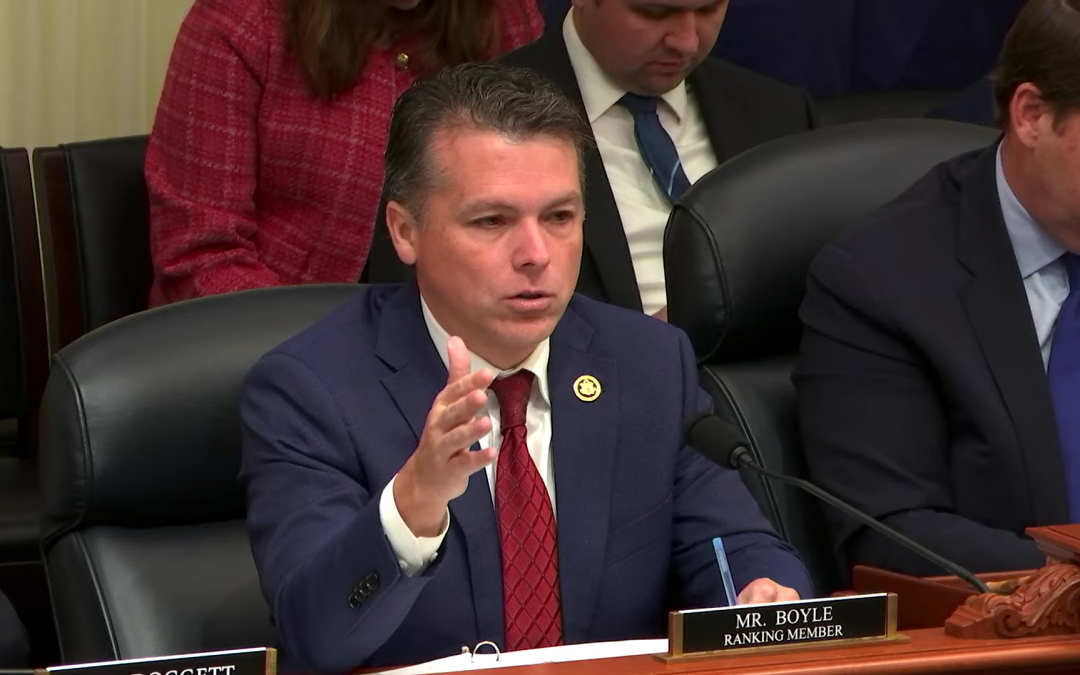
“Donald Trump, after being on the political scene for 10 years, has a ‘Great Healthcare Plan’… Just don’t get sick. Problem solved,” ranking member Rep. Brendan Boyle, D-Pa., said.
Witness Benedic Ippolito, a senior fellow at the American Enterprise Institute, said that for two years in a row, national health expenditures have increased faster than inflation or economic output. He said this is a problem for the federal government because it “keeps absorbing a larger share of that total spending.”
According to the health policy research organization KFF, spending on health care constitutes about 18% of America’s GDP, up from 5% in 1960.
“Given where we are at… further increasing rates of spending growth are a major, major problem,” Ippolito said. “The key question for you all is to try and think about areas where federal health spending is not tightly tied to value that beneficiaries or individuals are actually receiving.”
Joel White, president of the Council for Affordable Health Coverage, told the committee he believes Congress has two paths: spend more money “propping up a broken system” or fix laws and incentives that “destroyed competition.”
He said he thinks Congress needs to take the latter route and start by dealing with monopolies.
In the past 30 years, consolidation in provider markets has increased significantly, according to KFF. The organization found that a “substantial body of research” indicates that this consolidation has caused higher health care costs and spending.
Along with Balint and White, Arrington and Rep. Pramila Jayapal, D-Wash., also said reducing market consolidation is something Republicans and Democrats can work together to fix.
White told Medill News Service that like many issues, health care policy tends to be partisan, but people on both sides of the aisle are frustrated with the status quo and want to see meaningful reforms.
“You said the markets are broken when it comes to health care, and you said we gotta break up the monopolies,” Rep. Becca Balint, D-Vt., said, speaking directly to White. “I couldn’t agree with you more… I look forward to actually doing that work to break the monopolies and make health care more affordable for people.”