
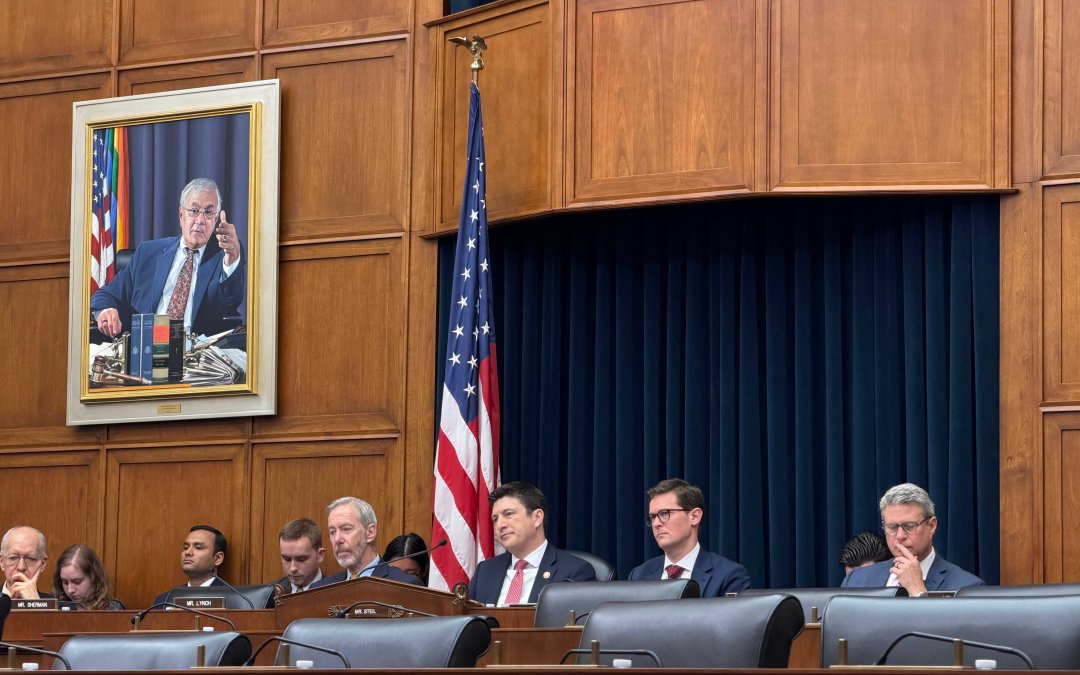
WASHINGTON — Republicans and Democrats shared bipartisan support for Earned Wage Access during a House hearing on Tuesday, but disagreed on whether it needs to be treated like credit — a distinction that could determine how much consumers pay in fees and how tightly the fintech industry is regulated.
Earned Wage Access allows employees to receive portions of their earned wages before their official payday, typically via employer-integrated apps. This model is designed to address cash-flow gaps created by biweekly or monthly pay cycles.
“It’s quite striking, the degree of consensus. There seems to be a genuine agreement that [Earned Wage Access] are beneficial products,” witness and George Mason University law professor Todd Zywicki said in an interview with Medill News Service.
However, stakeholders have raised concerns over companies that charge fees as well as misleading promises to help consumers build credit, said the subcommittee’s ranking member Stephen Lynch, D-Mass.
The hearing, held by the House subcommittee on Digital Assets, Financial Technology, and Artificial Intelligence, also examined buy now, pay later services. These companies, including Klarna and Afterpay, allow consumers to buy goods in smaller, scheduled, often interest-free installments rather than one upfront payment.
These products have grown in usage and allow consumers to manage cash flow for everyday purchases. Democrats argued the trend reflects an affordability crisis rather than convenience. Lynch cited a Federal Reserve finding that nearly one-fourth of users did not make payments on time and faced late fees.
“Despite purporting to offer free services, some buy now, pay later loans, especially long-term loans, can ultimately be more costly than using a traditional credit card,” Lynch said.
Republicans and witnesses, however, said excessive oversight could reduce access and consumer choice for these lower-cost payment options.
“The modern American consumer finance system is really a miracle, if you think about it. You can walk into a car dealership today and walk out an hour later with a car,” said Zywicki, eliciting a chuckle from Committee Chair French Hill, R-Ark.
Maxine Waters, D-Calif., said consumer protections are “eroding” under the Trump economy and turning people toward Earned Wage Access services. She framed Trump’s proposed credit card interest rate cap of 10% as evidence of broader affordability pressures.
“We don’t agree on much of anything, but we do on this,” Waters said. “But Mr. President, you’re going to need to convince your Republican colleagues because they won’t consider this or any other bill that would help keep money in consumers’ pockets.”
Waters then turned to ask subcommittee Chair Bryan Steil, R-Wisc., if he believed the 10% interest cap advocated by President Trump required authorization by Congress, to which Steil yielded.
In the hearing, Steil referenced a draft of his proposed Earned Wage Access Consumer Protections Act, which would establish a federal framework governing Earned Wage Access providers, such as requiring those that charge fees to also offer a no-cost option. The bill remains a discussion draft.
After the hearing adjourned, Zywicki said the momentum for the bill was noticeable, though he foresees blue states trying to “muck around” with it as it moves forward, resulting in a bit of “political football.”
In the meantime, lawmakers remain divided over whether federal rules should preempt state regulation, setting the stage for more debate as the proposal moves forward.