WASHINGTON – The Senate failed to advance a bill aimed at stopping households and small businesses from footing the bill for data centers’ growing electricity needs Wednesday, falling three votes short of the 60 needed to move the measure past the filibuster.
The House passed its version of the legislation in an overwhelming 417-3 vote earlier this month, but opposition by Senate Democratic leadership kept the measure from clearing a procedural hurdle just days before the Senate’s pre-election recess.
The Ratepayer Protection Act, introduced in the Senate by Sen. Jon Husted, R-Ohio, would require state regulators to consider making data centers pay for the new infrastructure needed to serve them rather than passing those costs on to customers.
Under the measure, state regulators would have one year to begin considering the federal standard and two years to decide whether to adopt it. States, however, would not be required to put those protections into place.
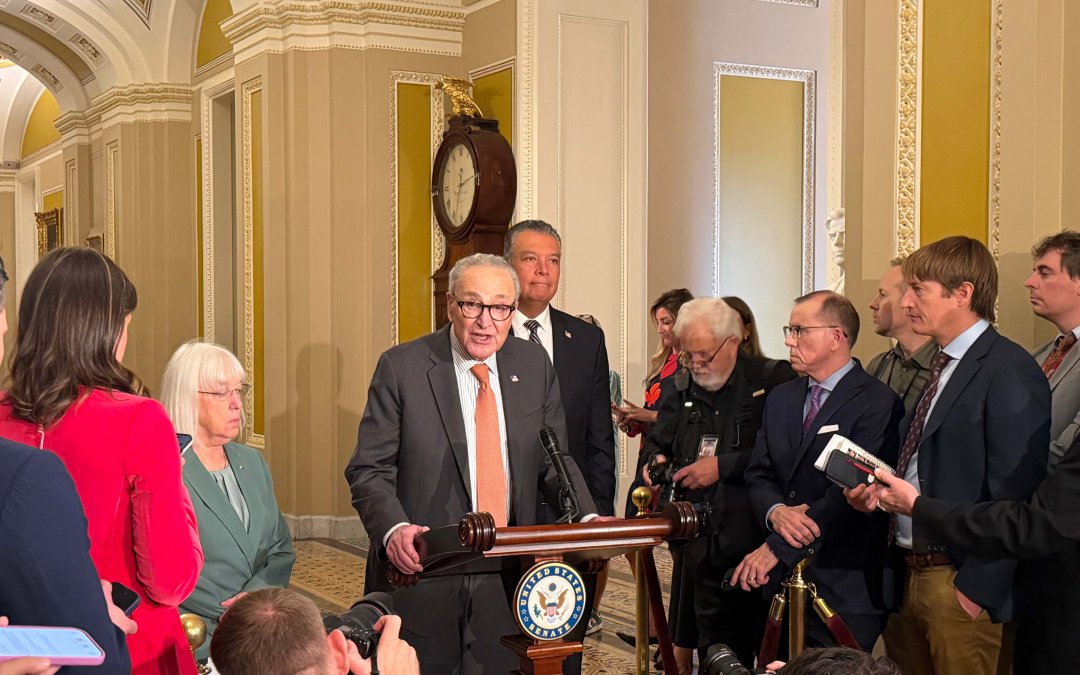
That distinction became the central point of contention leading up to Wednesday’s vote. Senate Minority Leader Chuck Schumer, D-N.Y., argued that the measure left too much discretion to state regulators.
“An optional guardrail is not a guardrail at all,” Sen. Schumer said Tuesday. “The core difference is simple. This bill makes the protections optional. Senate Democrats want to make it mandatory, plain and simple.”
Sen. Husted defended the state-based approach, arguing that electricity regulation is largely handled at the state level.
“The federal government doesn’t run the grid,” Husted told reporters Tuesday. “The states run the grid. You have to do it in a collaborative process with the states.”
The debate comes as the rapid expansion of data centers has raised concerns over who should pay for the power plants, transmission lines and other infrastructure needed to serve facilities that consume enormous amounts of electricity.
Ari Peskoe, director of the Electricity Law Initiative at Harvard Law School, said data centers can raise customers’ electricity costs in two primary ways. Utilities can spend billions of dollars on new infrastructure and spread those costs across their customers, while increased electricity demand can also drive up prices in wholesale power markets.
Jesse Buchsbaum, an economist and fellow at the nonpartisan research organization Resources for the Future, said whether customers end up paying more depends largely on how much of those added costs data centers cover themselves.
If a data center pays for its infrastructure and contributes to the broader costs of maintaining the grid, Buchsbaum said rates for other customers could fall. If it does not, some of those costs can be spread across households and businesses.
Both experts said the federal standard in Husted’s bill could provide meaningful protections if states adopted it. The uncertainty is whether they would.
“The bill doesn’t create requirements or even incentives for states to take their actions,” Buschsbaum said. “It really just provides a voluntary framework that states can adopt if they choose to.”
Democrats have offered competing proposals that would place more direct federal requirements on large electricity users. Sen. Martin Heinrich, D-N.M., introduced the GRID Savings Act in July, which would direct the Federal Energy Regulatory Commission to establish rules requiring large electricity users to cover certain grid costs associated with connecting to the system.
“This is nothing more than a messaging bill on the eve of an election,” Heinrich said during a pre-vote Senate floor debate Wednesday. “Congress needs to pass legislation with real teeth.”
Husted’s office pushed back on criticism that the bill is merely symbolic.
In a statement to Medill News Service, spokesperson Olivia Tripodi said many states are already searching for ways to protect ratepayers by requiring data centers to pay for the full incremental costs of new infrastructure, and passing this bill would have provided them with a framework to accomplish that.
The data center issue holds particular significance for Husted, who is running to retain his Senate seat against former Sen. Sherrod Brown, D-Ohio. Electricity prices and data center development have become prominent issues in the race.
Asked Tuesday whether the bill was tied to his reelection fight, Husted said his focus was not on securing a political win.
“I’m not looking for a win for me,” Husted said. “I’m looking for a win for the American people.”
The vote leaves unresolved how Congress will address the infrastructure costs associated with the rapid growth of data centers, though Husted said protecting customers from those costs remains a problem lawmakers must solve.
“We have to make sure that the growth of these data centers does not mean higher electric bills for working families, for senior citizens or for small businesses,” Husted said before the vote. “The companies driving this growth should be held responsible for the power they need to operate, not the American ratepayer.”