
WASHINGTON — His top hat, fake mustache and the thick wad of cash he used to wipe his brow made it clear who was sitting behind Netflix’s Co-CEO Ted Sarandos at a Senate hearing in February. An attendee dressed as Mr. Monopoly stood out in the packed room as the Judiciary Committee questioned a potential merger between Netflix and Warner Bros. Discovery.
“Netflix has no political agenda of any kind,” Sarandos said.
But that doesn’t mean that politics has stayed clear of the merger.
President Donald Trump’s apparent political interference reached a boiling point in February when Trump demanded on social media that Netflix fire Susan Rice, a board member who worked for the Clinton, Biden and Obama administrations. Sarandos met with White House staffers and Department of Justice officials on Feb. 26, and by that afternoon, Netflix was out of the deal.
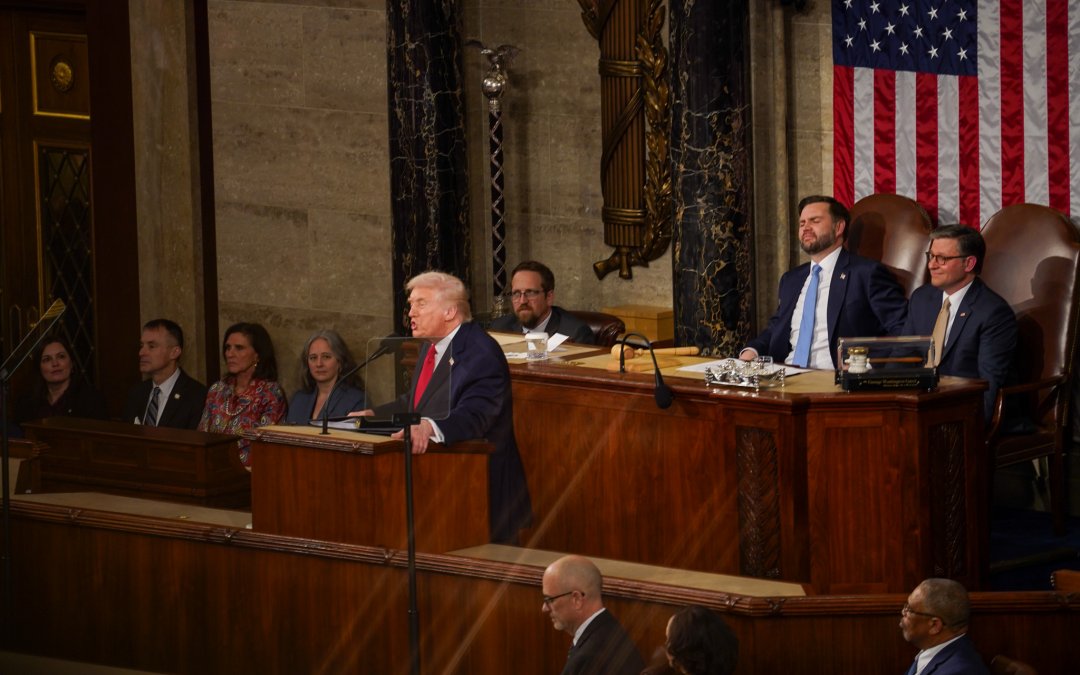
Paramount Skydance offered a winning bid of $111 billion. Two days prior, Paramount CEO David Ellison attended Trump’s State of the Union speech as a guest of Representative Lindsey Graham, R-S.C.
And again, on Monday, concert firm Live Nation reached a settlement with the Department of Justice that Senator Amy Klobuchar, D-Minn., described as a “corrupt antitrust settlement” on social media.
Under Trump, the Department of Justice has played a prominent role in antitrust cases as the value of mergers has shot up. In a direct comparison of former President Joe Biden’s last year in office and Trump’s first year in office, the number of deals increased by 9.8% while deal values shot up by 73%, according to data from the Institute for Mergers, Acquisitions & Alliances.
“There appears to be an unusual amount of involvement by the top level leadership of the Department of Justice, indicating that they wanted to have a particular deal go through, even if the Antitrust Division was still actively engaged in reviewing facts and gathering information,” said Jonathan Rusch, an adjunct professor at American University College of Law.
As a senior fellow for NYU School of Law’s Program on Corporate Compliance and Enforcement, Rusch has been tracking federal merger reviews since Trump’s first term.
Rusch said the current Justice Department has been significantly more lenient than Biden in allowing mergers and acquisitions of massive firms.
Democratic lawmakers have flagged Trump’s interference in antitrust cases as a concern. In a House Judiciary subcommittee hearing in January on competition in the digital streaming market, Representative Jerrold Nadler, D-N.Y., called out Trump’s efforts to pressure the Federal Trade Commission.
“The White House must not be allowed to use the merger review process as another tool in its campaign to bend the media to its will,” Nadler said. “A proposed merger whether it be with Netflix, Paramount, or some other suitor, must be analyzed on its own merit.”
And yet, the Trump administration’s power over market dynamics goes far deeper than closed-door meetings with company execs. It rests on policy cemented in the Biden administration.
Biden was known for trust busting. His appointment of FTC Chair Lina Khan set a record for merger challenges. In her four-year tenure, Khan spurred 37 deal abandonments after merger investigations, according to the M&A trade publication MLex.
In 2024, the global business media organization Fortune pinpointed five stalled mergers set for reconsideration under Trump’s administration. Within a year, officials approved two of the five deals. A federal court blocked a near-$25 billion grocery store merger. Changes to deal terms doomed another. In November, justice cleared the final case, Google’s $32 billion acquisition of Wiz.
While Trump was quick to replace Khan with Republican Andrew Ferguson and slash Biden’s 2021 executive order to promote competition, he has kept three key actions. The 2023 Merger Guidelines, which raised the bar for combining businesses. The 2025 Hart-Scott-Rodino Act required more thorough filing requirements Justice also has continued to aggressively block big tech mergers in court.
John McGinnis, a law professor at Northwestern Pritzker School of Law and former deputy assistant attorney general in the Office of Legal Counsel at the Department of Justice, said antitrust regulations have remained classically populist on paper.
“There’s more continuity between the Biden administration and the Trump administration than might have been expected, because the Biden administration was quite radical, and it got a lot of pushback,” he said. “You might have expected there to be a wholesale reversal of the policies and the merger guidelines that were put in, and that has not happened.”
McGinnis said this demonstrates how Trump has kept a foothold in merger activity, despite laws that forbid political interference in the FTC.
Trump has kept Biden’s policies because he can use them at his discretion.
“It’s ultimately a decision. These are guidelines, after all,” he said. “They’re not judicially reviewable, and so the administration can do different things.”
As a result, the Justice Department’s Antitrust Division has treated certain cases more favorably, and simultaneously rested on Biden-era policy to block other deals.
Rusch said antitrust lawsuits under Trump and Biden were fairly consistent. Both administrations pursued civil action against Google and Live Nation to quell the monopolization of single companies. Yet, while Trump and Biden may be operating under similar policies, the outcomes of mergers and acquisitions litigation have been vastly different.
“The White House, and I’m just being generic about this, has chosen to signal to the corporate world that there are certain deals where the White House and perhaps even the President will take a personal interest,” he said.
From the entertainment industry to ride-share to big tech, corporate power is being consolidated into a few companies owned by a dinner-party-sized group of billionaires. In January, Elon Musk announced a merger worth $1.25 trillion between SpaceX and xAI, both of which were already under his ownership and control.
Accounting firm Ernst Young Global Limited published data on M&A activity revealed that while the volume of deals only slightly increased from 2023 to 2025, the value of these deals almost doubled. This confirmed the trend highlighted by Medill News Service’s analysis of merger and acquisition data.
The result for Americans, Rusch said, is higher prices and less consumer choice.
“The broad concern needs to be with the larger and larger companies engaging in these mergers, the more clout they have in whatever market or markets in which they participate,” he said. “That does allow them the greater capability to set prices that may be higher for consumers.”
Technology companies have led the Trump-era mergers, both in value and in volume, which Clinical Professor of Business Law at the Kellogg School of Management Mark McCareins said could be driving the uptick in successful deals.
“The tech markets are changing overnight,” he said. “So, that’s spurring a lot of M&A activity.”
In one of the largest recent cases in the tech industry, Hewlett Packard Enterprise acquired Juniper Networks in 2025 for $14 billion for about 20% of market power in AI and cloud networks.
Democratic lawmakers widely criticized the deal. Senate Democratic Whip Dick Durbin, D-Ill., and Senator Cory Booker, D-N.J., sent a letter to Attorney General Pam Bondi criticizing the Department of Justice Antitrust Division’s handling of the merger.
“This troubling development in the Antitrust Division does not appear to be a one-off, but rather part of a larger trend of the Trump Administration abusing its antitrust regulatory and enforcement authority to secure partisan victories for President Trump’s personal benefit,” the senators wrote.
While Republicans did not release statements on the HPE-Juniper merger specifically, both Republicans and Democrats have spoken on the need to strictly regulate big tech.
Senator Josh Hawley sits on the Judiciary Committee and told Axios that big tech companies are untrustworthy because they “regularly mislead Congress and mislead the public.”
Two top officials in the DOJ were allegedly fired in July 2025 for speaking against the merger.
Roger Alford, who was formerly chief of the Department of Justice’s Antitrust Division Abigail Slater’s second-in-command, told the media Bondi’s senior aides were making deals with lobbyists to negotiate terms.
In a speech at the Technology Policy Institute in Colorado a month later, Alford warned of the merger’s implications.
“I hope the court blocks the HPE-Juniper merger,” he said. “If you knew what I knew, you would hope so too.”
It was only a matter of time before another huge tech company appeared before the Antitrust Division, and this time, it was Slater who was out. She resigned mid-February in the midst of litigation over Live Nation’s dominance over concert ticket prices.
Mark McCareins said the division chief does not influence the day-to-day of antitrust enforcement, although Slater’s ouster could give an unstable public impression of Justice.
“Slater’s resignation may appear to make the agency on an unchartered course because they don’t have a leader and they haven’t replaced her,” McCareins said.
Although Trump’s Justice Department settled with Live Nation, it continues litigating against Apple and Google on monopoly charges.
Apple was awaiting further litigation after a pause in October due to the government shutdown.
The FTC threatened to investigate Apple based on accusations of news bias. A month ago, FTC Chairman Andrew Ferguson sent a letter warning Apple’s chief executive that Apple News had violated consumer agreements by allegedly censoring conservative voices.
Ferguson’s warning paralleled ongoing threats from the Federal Communications Commission Chairman Brendan Carr to left-leaning media.
As political interests have become muddled with major business deals, Rusch said it is no surprise that firms feel pressure to seek out Trump’s good graces.
“This is an unprecedented level of signaling by a White House administration that you will need to get the President’s blessing to get your corporate deal through if it’s a big enough deal,” he said.