
WASHINGTON — Lawmakers at a U.S. Helsinki Commission hearing Tuesday spotlighted Turkey as a key regional partner in efforts to remove Russian forces in Syria.
“An increased military presence by Turkey and northern Syria naturally puts the Russian presence under pressure and on path for total removal,” said Rep. Joe Wilson, R-S.C., chairman of the Helsinki Commission.
Turkey has controlled the northern part of Syria since 2016 through its Armed Forces and the Turkish-backed Syrian National Army. It has interfered with several Russian operations, including plans to target Idlib, a city in Syria, aimed at eliminating groups opposed to former Syrian President Bashar al-Assad. Lawmakers said the U.S. must cooperate with Turkey to counter Russian aggression and restore American credibility in the region.
However, the U.S. alliance with Israel complicates foreseeable cooperation with Turkey, given ongoing tensions between the two Middle Eastern countries. Turkey repeatedly criticized Israel for its assault on Gaza, with President Recep Tayyip calling Israel a “terror state” in 2023, while Israel has said it wants to keep Syria as a buffer zone. This leaves the U.S. with two options — side with one country or find a way to maintain both alliances.
Lawmakers discussed solutions to maintain both alliances with experts calling for engagement-based policies rather than maximum-pressure tactics like sanctions.
“If, in fact, by enticing and engaging our allies like Turkey and the Gulf to come in… we can get economic investment and economic stabilization and reconstruction going,” said Richard Outzen, a nonresident senior fellow at the Atlantic Council. “We start a virtuous cycle that actually lowers the tension among the different Syrian groups but also among our occasionally fractious allies.”
Tensions may not subside with all allies, however. Rep. Chrissy Houlahan, D-Pa., pointed to ongoing U.S. tensions with NATO, which she said could help the U.S. coordinate with Turkey. Michael Doran, senior fellow and director at the Hudson Institute’s Center for Peace and Security in the Middle East, responded that NATO does not play a large role in Middle Eastern conflicts.
“The European allies in this scenario are going to play a secondary role,” Doran said. “There’s been a pretty clear distinction since the Suez Crisis — the Europeans take care of European security, and the United States and its Middle Eastern allies take care of Middle Eastern security.”
Beyond partnering with regional allies, the committee emphasized that the U.S.’s main focus should be on internal reform to Syria’s military and economy. Following the fall of Assad in 2024, Syrian President Ahmed al-Sharaa initiated numerous projects to stabilize Syria, including the construction of the Damascus Towers City, the expansion of the Damascus airport and the development of a subway system.
However, the committee addressed issues regarding Syria’s dependence on Russia for resources used for al-Sharaa’s projects. Rep. Jake Ellzey, R-Texas, focused on Russian wheat and oil, asking how the U.S. can provide a stable supply chain.
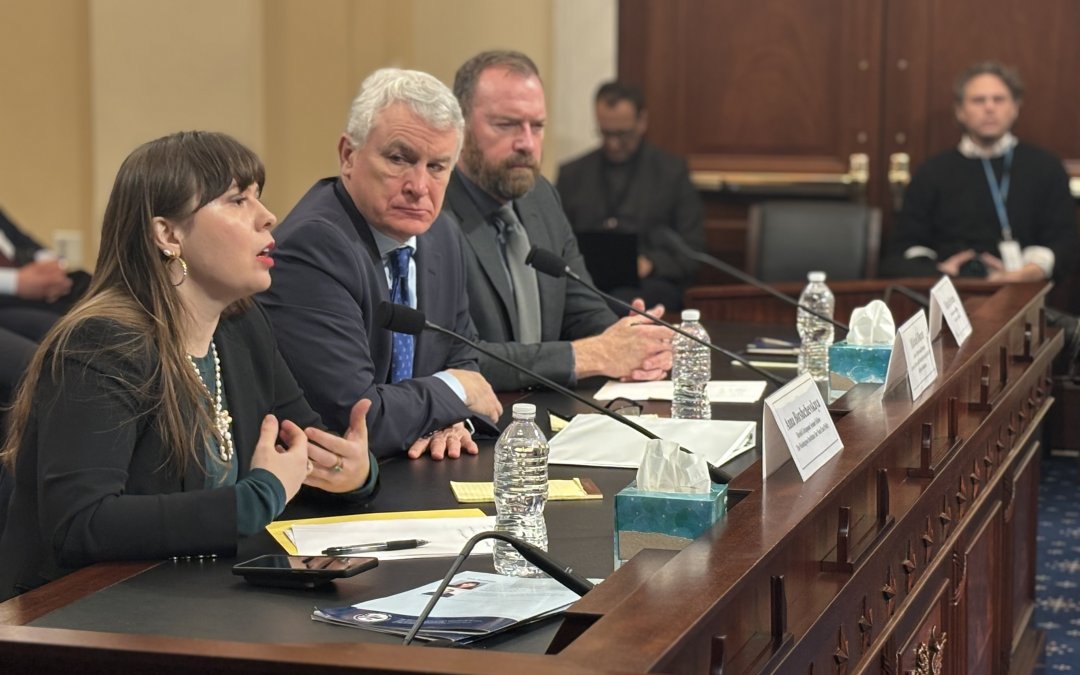
Anna Borschevskaya, the Harold Grinspoon senior fellow at the Washington Institute for Near East Policy, said that much of the Russian resources are “stolen from Ukraine to begin with.”
A few lawmakers raised concerns about whether Syria’s new regime will not fall into the same predicament seen during Assad’s time in office. Ellzey asked whether Al-Sharaa could be trusted, to which Outzen responded that “no trust should come into play when talking about the Middle East.”
“The quickest way to protect all of them is to institutionalize and reform the Syrian military,” Outzen said. “…Then we can trust.”