
WASHINGTON — Native American tribal leaders, advocates and policy experts expressed strong support Wednesday for a draft bill aimed at providing justice and protections for Native children. Speakers emphasized the need for federal support of culturally responsive justice systems and welfare programs to amend longstanding disparities affecting Native youth.
During a Senate Committee on Indian Affairs hearing, senators heard testimony from representatives as they examined Title II of the draft Native Children’s Commission Implementation Act. The hearing followed Chairman Lisa Murkowski’s, R-Ala., proposal of the bill in August 2025.
Native Americans face some of the highest rates of crime and involvement with the justice system in the country. The draft bill seeks to remedy these inequities through provisions that safeguard the wellbeing of Native American children and families.
“This committee has built a strong record documenting the serious public safety challenges across Indian country, especially the persistent gaps in law enforcement,” Murkowski said in her opening statement. “We’ll continue that important work, and it’s just as important that we focus on the resources that communities need before law enforcement becomes involved, and to support families and victims after that involvement occurs.”
Title II of the bill, titled “Justice for Children, Youth, and Families,” addresses juvenile justice, domestic violence and crime. The title also codifies the Tiwahe Demonstration Program within the U.S. Department of the Interior. The Tiwahe program is a Bureau of Indian Affairs model that integrates tribal practices, customs and values into the delivery of essential services. In 2015, six tribal sites were chosen to pilot the program for five years, including Fort Belknap Indian Community.
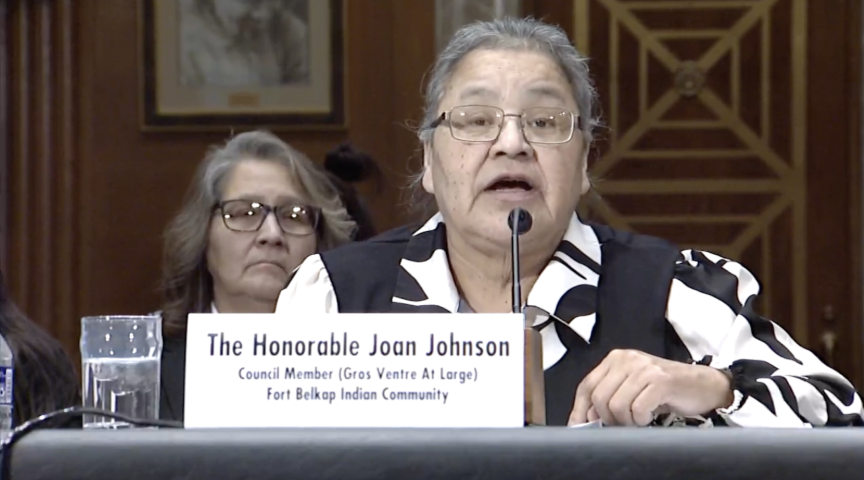
Joan Johnson, a council member representing the Fort Belknap Indian Community, underscored the need to codify the Tiwahe program.
“For Fort Belknap, Tiwahe is not just a line item in a budget,” Johnson said. “It’s the cornerstone of our success in protecting our most sacred resources, which are our children.”
Johnson commended the program’s flexibility, saying its implementation has allowed the Fort Belknap Reservation to shift from “one-size-fits-all federal mandates” and develop responses that reflect the reservation’s unique culture, traditions and spirituality.
Hawaii Correctional System Oversight Commission Chair Mark Patterson revealed that despite being incarcerated at up to six times the rate of white women, Native women are least represented in the data that influences federal policy because they represent a small fraction of the overall population. Patterson said correcting this imbalance is the “spirit of Tiwahe.”
“When we invest into Tiwahe, we invest in justice systems that heal rather than harm, and that honor the cultural wisdom and sovereignty of the communities they serve,” Patterson said.
Witnesses also pointed to higher rates in tribal youth incarceration to highlight the importance of Title II’s provisions to establish a Tribal Advisory Committee on delinquency prevention.
“We support passage of the Native Children’s Commission Implementation Act because our youth are significantly over-represented in the federal justice system,” Spirit Lake Tribe Chairperson Lonna Jackson-Street said. “We urgently need help for our children to avoid such incarcerations, which often expose them to drug dealers and other serious offenders.”
Jackson-Street cited the ongoing Missing or Murdered Indigenous Persons crisis, which refers to the disproportionately high rates of Indigenous people who go missing or are killed. She paid tribute to lives lost and urged the implementation of a model law enforcement cooperation agreement that would help U.S. attorneys coordinate search and rescue efforts.
With senators on both sides of the aisle showing support for the Native Children’s Commission Implementation Act, StrongHearts Native Helpline executive director Lori Jump expressed hope that the legislation would be a step in the right direction in remedying inequities in the justice and welfare system for Native American children.
“It’s a start,” Jump told Medill News Service. “Does it balance it out? No. But I think it’s a great start and it really will make a huge difference in Indian country.”