
WASHINGTON — House Republicans and Democrats disagreed Tuesday over how to address the nation’s ongoing child care crisis, as concerns mount following the Trump administration’s freezes on child care funding amid fraud investigations.
During a House Subcommittee on Early Childhood, Elementary, and Secondary Education hearing, Republicans emphasized tax credits and targeted grants to help employers provide child care. Democrats, however, contended that reliance on the private sector alone would be insufficient to meet the scale of the crisis and called for increased federal investment. The hearing followed a June 2025 session that highlighted bipartisan recognition of a growing child care crisis threatening families and the workforce.
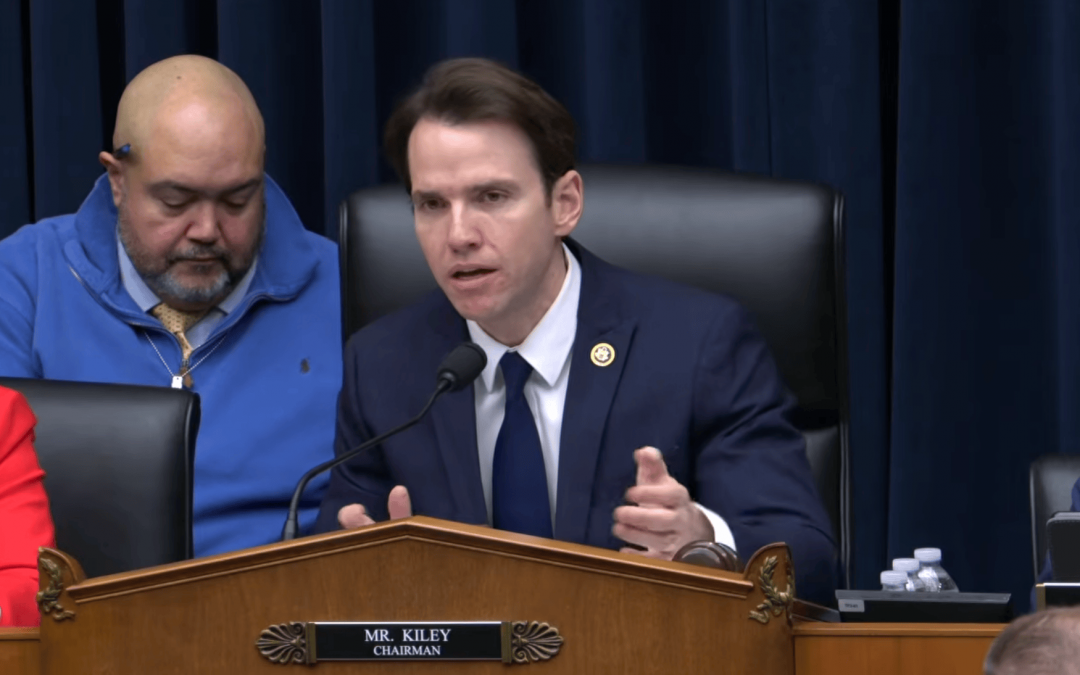
Subcommittee chair Rep. Kevin Kiley, R-Calif., laid the groundwork for the hearing, emphasizing that federal programs are insufficient to cover the high costs of child care for millions of children. He called for “private-sector innovation” to provide care for employees.
“Employer engagement is a critical leg in the three-part support system holding up our child care market. Families, government and employers each play a role,” Kiley said.
The hearing featured testimony from three business owners working to provide child care benefits to employees, including Alex Grover, chief executive officer of i2M. The manufacturing company partnered with a local child care provider in 2022 to offer subsidized, extended-hours care for their employees.
Grover described an employee who enrolled his children in the company’s child care program, enabling his wife to enter the workforce and eventually join the i2M team.
“That is not social policy,” Grover said. “It is a clear example of capitalism working as it should, aligning incentives in a way that benefits families, businesses and the broader economy.”
Democrats, meanwhile, stressed that the weight of addressing the nation’s child care crisis should not fall on employers alone. The ranking member, Democrat Suzanne Bonamici, D-Ore., said employer-led solutions can help but that Congress must pursue a “comprehensive solution” to ensure access to affordable, high-quality child care.
Rep. Summer Lee, D-Pa., echoed that view, highlighting the discrepancy in Pennsylvania’s child care system. Child care workers earn less than $30,000 a year, yet child care for one child costs nearly $14,000 annually, reflecting what she called a “broken” system.
“For every employer represented at our hearing today, how many others don’t offer any child care or paid leave, when workers have to care for their sick children or other family members?” Lee said. “This is a very big country with diverse industries and different types of business leaders. If we’re sitting here and we’re waiting for everybody to be benevolent, we are going to be waiting forever. We can’t only look at employers and the private sector to fix a broken system that everybody is under.”
Rep. Mark Harris, R-N.C., however, argued that responsibility for addressing the child care crisis should rest primarily with state and local governments and the private sector. He asserted that the federal government cannot sustainably “spend or regulate its way out” of the issue.
“We’re seeing the consequences of that approach play out right before our eyes in Minnesota, where weak oversight has allowed child care subsidy programs to become magnets for waste, fraud and abuse,” Harris said.
Pushing back on Harris’s reference to fraud in Minnesota, Rep. Adelita Grijalva, D-Ariz., said the Trump administration’s attempt to freeze child care in five Democratic-led states over suspected fraud came “without concrete evidence” and lacked an independent investigation.
Amy Matsui, vice president for child care and income security at the National Women’s Law Center, expressed concern that the Trump administration’s “fast, unprecedented action” to freeze funds after “unsubstantiated allegations” opens the door for vigilantes to target child care providers.
After the hearing, Matsui stressed that Congress needs to repeat what it did during the pandemic, when both sides of the aisle agreed to fund child care.
“I hope that the evidence of robust investments during the pandemic helping providers keep their doors open and people go back to work shows what happens when you make investments in the child care sector,” Matsui told Medill News Service.
She observed that Republicans and Democrats now see very different solutions to the child care crisis.
“There seems to be disagreement about the impact of tax solutions compared to public investments,” Matsui said. “But if you look at the broken market that child care is without input from a third party investor, which is the government, the fundamental math problem is not gonna get solved.”