
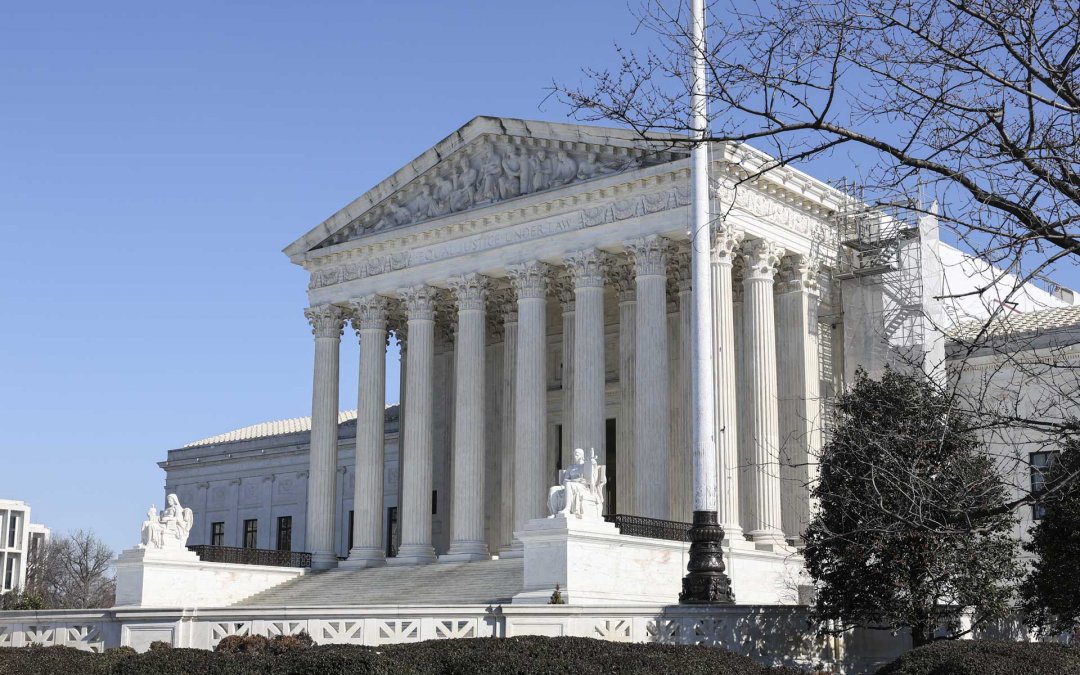
WASHINGTON — The Supreme Court heard a case Tuesday on whether First Choice Women’s Resource Center, a New Jersey faith-based pregnancy center, can challenge a state subpoena in federal court before it is enforced.
New Jersey issued a subpoena seeking 28 categories of documents about the centers’ practices, including a list of donors, as part of an investigation into whether First Choice was misleading potential clients about their services.
First Choice sued New Jersey in December 2023, alleging that the subpoena violated its First Amendment rights and created a chilling effect on donors.
The subpoena at the heart of the dispute is non-self-executing, meaning that a court order is required for its enforcement. First Choice argues that the subpoena’s existence, even before it’s executed, is not without penalties.
“It says that if you fail to obey the subpoena again — not a later court order — if you fail to obey the subpoena, you could be subject to contempt, you could lose your business license,” Erin Hawley, the attorney for First Choice, said. “Those are the death knell for nonprofits like First Choice.”
While the case is working its way through state court, First Choice went to federal court with a civil rights claim, but was told the case was “unripe”. A central legal question in front of the Supreme Court on Tuesday was whether the case was “ripe” enough to be heard in federal court.
First Choice argued that the chilling effect of the subpoena was a “burden” on the center, which made the case “ripe” enough. Justice Ketanji Brown Jackson questioned whether the subpoena had actually caused real harm before its enforcement.
“Even if we agree that your constitutional rights are arguably burdened, is it really occurring at the moment of receipt of the subpoena?” Jackson said.
New Jersey argued that First Choice’s claims are “tethered to a future downstream state court order” and not to the subpoena itself. Sundeep Iyer, the chief counsel to the New Jersey Attorney General, said that there was no evidence of actually being chilled by the subpoena over the last two years of litigation.
Chief Justice John Roberts questioned how such evidence could be gathered in the first place.
“Well, how do you get that evidence? Somebody comes in and says, ‘I’m chilled, I don’t want to reveal my name, address, phone number, et cetera, and here is my affidavit,’” Roberts said. “That’s not going to work, is it?”
Several nonprofits across the country have filed amicus briefs for First Choice, arguing that the case could majorly impact free association and speech in organizations nationwide.
Grayson Clary, staff attorney at the Reporters Committee for Freedom of the Press, said that several media outlets have received similar subpoenas, citing the Federal Trade Commission’s recent demands for internal records from watchdog nonprofit Media Matters.
“It makes sources less willing to talk to you, if they worry that speaking to you is going to get them dragged into some kind of investigation like this, and so the consequences can be really chilling,” Clary said.
However, Clary felt the oral argument was encouraging, noting how justices from both sides of the ideological spectrum were more skeptical of New Jersey’s claims.
“It’s always hard to read the tea leaves, but it sounded like a majority of the justices shared that attitude, and we certainly hope that’s the direction they’ll go in the ruling,” Clary said.
In an amicus brief, the ACLU argued that such First Amendment cases are important so that state investigatory tools aren’t used for retaliation.
“To ensure that these investigatory tools are not abused to retaliate against the ideological opponents of those in office, federal courts must promptly review claims that law enforcement subpoenas violate the First Amendment.”