
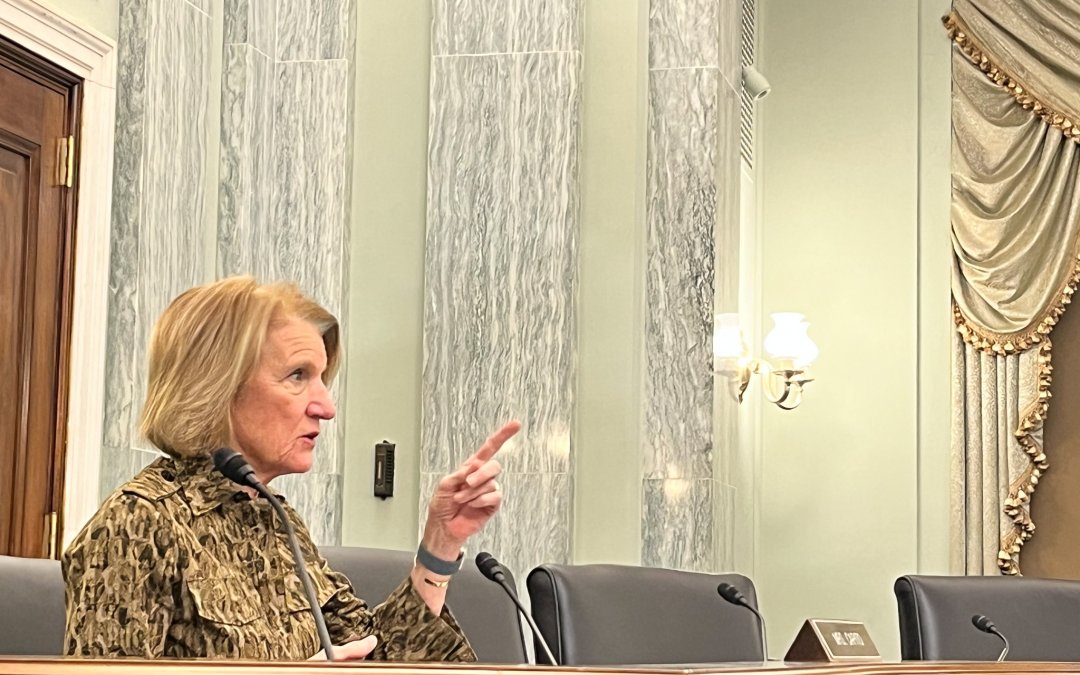
WASHINGTON — Questions over the Federal Communications Commission’s rule restricting television ownership and whether changes to the ownership cap are needed were the core of a Senate committee hearing on Tuesday.
The hearing comes amid debate over a potential Nexstar-TEGNA merger, which is valued at over $6 billion. If the merger went through, the conglomerate would reach 80% of U.S. TV households, more than double the current limit of 39% set by the FCC to prevent broadcast monopolization.
“The days when broadcasters built a uniform global village across America’s living rooms is over, as media has splintered into 1000s of websites, TikTok accounts, podcasts and other forms of content, each catering to its own niché audience,” said Sen. Ted Cruz, R-Texas, the chairman of the Senate Committee on Commerce, Science, and Transportation. “Yet, even in this fragmented landscape, the media’s ability to shape national discourse remains incredibly powerful, making questions about market concentration as important as ever.”
Chris Ruddy, Newsmax’s CEO, advocated for leaving the cap in place to protect local news networks from media conglomerates. \
“Raising the cap means that two or three corporations will eventually own most stations in the nation and control almost all local news,” said Ruddy.
He added that “it doesn’t serve the public interest, competition, or the diversity of voices that the public would like, especially with local news.”
Sen. Maria Cantwell, D-Wash., expressed concerns about the potential effects on local news if the Nexstar-TEGNA merger is approved.
“A single company will control 265 stations capable of reaching 80% of all television households, more than double the current cap and for nearly half of their audience, 100 million people, Nexstar would own two or more stations in the media market,” said Cantwell. “And that concerns me. To me, that is not more local voices, that is fewer.”
Modernizing the rules and removing the ownership cap are necessary for the future of broadcast journalism, said Curtis LeGeyt, president and CEO of the National Association of Broadcasters.
“Our industry is competing for advertising dollars with Google and Facebook, global behemoths,” said LeGeyt. “We are competing for audience and for programming with Netflix and Amazon, and simply put, we are doing it with one hand tied behind our back, because we can’t even gain scale nationally to allow us to compete in those markets.”
LeGeyt added that modernizing ownership rules would allow for newsrooms to consolidate and become profitable.
President Donald Trump and Brendan Carr, Chairman of the FCC, both expressed support for the Nexstar-TEGNA merger over the weekend.
In a Truth Social post, Trump wrote in part, “GET THAT DEAL DONE!”
“We need more competition against THE ENEMY, the Fake News National TV Networks,” Trump wrote. “Letting Good Deals get done like Nexstar – Tegna will help knock out the Fake News because there will be more competition, and at a higher and more sophisticated level.”
Carr reposted Trump’s post on X and stated, in part, “Let’s get it done and bring real competition to them.”
Other experts at Tuesday’s hearing did not address whether the cap should be removed. Instead, they offered solutions to concerns raised about market competition and local news.
Former FCC general counsel Thomas Johnson said the Department of Justice should address mergers and competition concerns instead of a “prescriptive” rule like the current ownership cap. He said regulators need “a scalpel instead of a sledgehammer.”
Steve Waldman, founder and president of Rebuild Local News, said Congress should keep local news at the forefront of its decision-making. He suggested that if Congress lifts the cap, “liberalization” should be tied to requirements to hire more local reporters.
Senators and experts agreed that local news plays a critical role in communities.
If people do not have access to local news, they may lack the necessary information to make decisions or take actions, said Sen. Todd Young, R-Ind. He added that a sense of community could also be impacted, but democracy is “what’s most at stake.”
“If I don’t know what’s happening in the local planning meeting, if I don’t know what’s happening in the school board, if I don’t know where monies are being invested locally as it relates to road projects, it’s hard for me to cast informed votes at the ballot box,” Young said. “It’s hard for me to meaningfully engage in democracy at the local level.”
According to a 2025 Pew Research Center survey, 70% of adults in the United States trust local news, making it the most trusted source ahead of both national news and social media. Television is the second most popular news source after digital platforms like social media and news apps.
“Time is running out. We need to reverse this before nothing’s left,” Waldman said. “We, at heart, need more human reporters living in the communities, accountable to and listening to their neighbors.”