
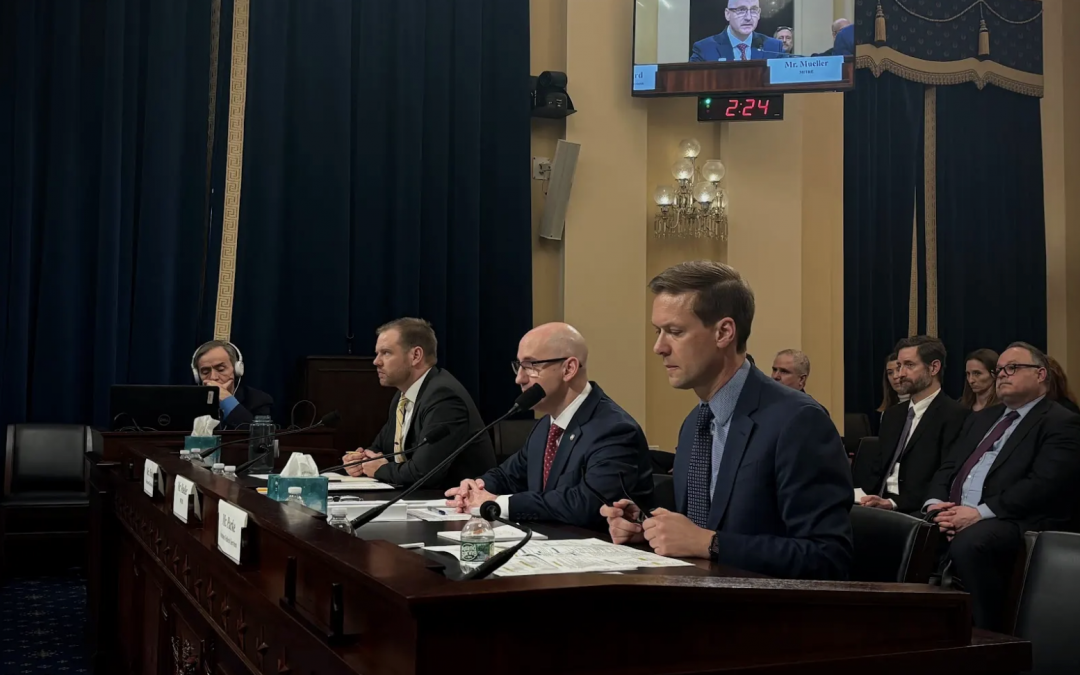
WASHINGTON — Bi-partisan lawmakers accused the Department of Veterans Affairs’ representatives of mismanagement at a hearing on the digital GI Bill on Wednesday morning, since the program’s cost has ballooned and veterans have faced delayed education and housing payments.
“You have to take responsibility for the continued delays and the skyrocketing costs on behalf of the American taxpayers,” said Rep. Derrick Van Orden, R-Minn., chair of the House Veterans’ Affairs Subcommittee on Economic Opportunity. “Student veterans deserve a reliable, moderate system, and taxpayers deserve assurances that their investment is worthwhile.”
Delays in digital GI Bill benefit payments first surfaced after the VA rolled out a new claims system in August and September, causing thousands of education stipends to fall behind schedule. This is the latest blow the VA has faced within a decades long series of disruptions. The agency serves millions of veterans each year by covering tuition and fees, monthly housing allowances, healthcare, disability benefits and job retraining, according to data on VA’s webpage.
By November, the federal government shutdown exacerbated the problem, leaving students without timely housing payments for housing and slowing claims processing to up to 49 days, according to FedScoop. The disruptions impacted approximately 75,000 beneficiaries.
Rep. Chris Pappas, D-NH, said administration officials need to take accountability for such failures.
“When are we, as a committee, gonna practice what we preach?” Pappas said.
William Hubbard, vice president for veterans and military policy at Veterans Education Success, said while VA was aware of the possibility of these issues before students and veterans felt the impact of the delays, there was no proactive warning or reliable channel for students to get answers.
“One student told us that her benefits were missing for nearly three months. Her car was repossessed and she was facing eviction while attending school out of state with no family support nearby,” Hubbard said.
However, Executive Director at Education Service, Veterans Benefits Administration Kenneth Smith said VA acknowledged its mistakes in September 2024, and has made significant improvements to its digital GI bill processing systems.
Since January 2026, the average processing amount of days for veteran claims was 5.6 days, Smith said. 65 percent of those claims were processed without any human action with a 97 percent accuracy rate, he said.
Van Orden asked how long it took the VA to be awarded a contract since they received $453 million to develop the digital GI Bill.
Smith said he was not certain what the timeline was.
“Okay, I’m not asking, I’m telling you. You’re gonna give me that answer, because you guys have a 0 percent record of doing this stuff on time,” Van Orden said.
Managing Director and GI Bill Program Manager Justin Parke said that based on the information the agency had at the time, he felt VA had a “reasonable” response. With hindsight, however, more time would have been helpful, Parke said.
Van Orden also suggested the VA establish a contingency system to protect veterans when major technology failures disrupt payments. He said the department should set aside funds to issue emergency payments if claims processing breaks down.
“I don’t care if it goes, you know, electronically, mail on the check, because hopefully by the time the check gets there, the system is back online again,” Van Orden said.
Van Orden said if needed, he and Nikki Budzinski, D-IL, can discuss the potential of legislating that change. He said Congress should not put bureaucracy above those who served their country.
“It ain’t about you,” Van Orden said. “It’s about the veteran.”