
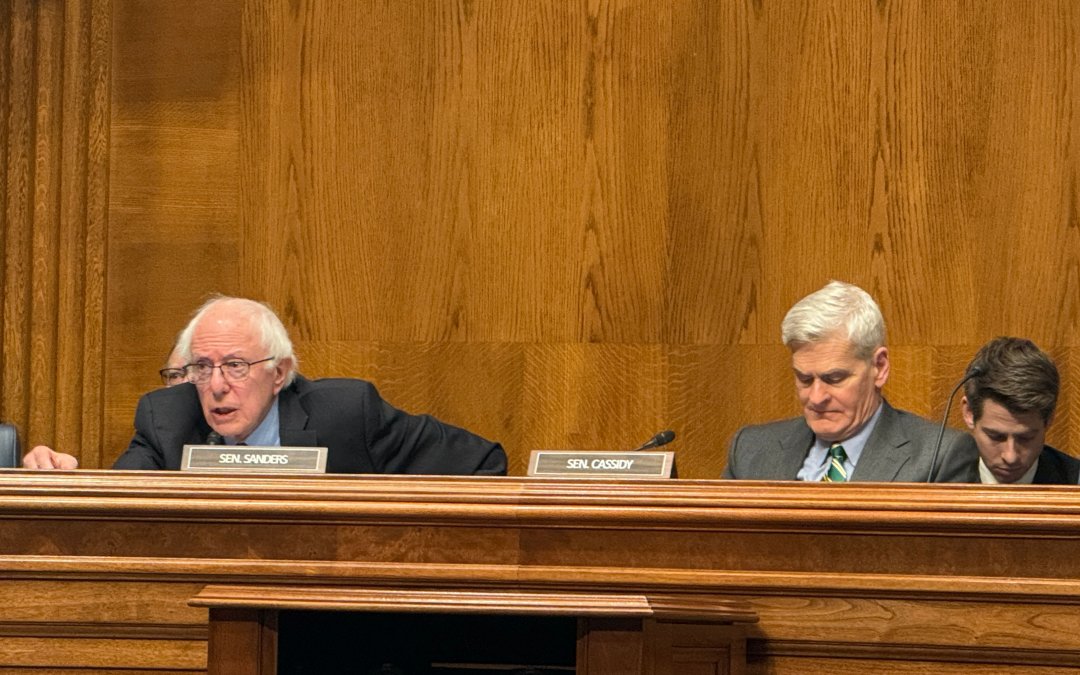
WASHINGTON — In a debate over how to fix the struggling American education system, senators disputed policies that allow public education funds to follow students to schools of their choice, including private schools.
“Traditional schools work for many students, what we’re asking though is to give the parent the choice if it does not,” said Sen. Bill Cassidy, R-La., the chairman of the Committee on Health, Education, Labor and Pensions.
During the committee’s Wednesday hearing on school choice, senators discussed the implications of giving taxpayer dollars to private schools that can discriminate and deny admission to certain students. While Republican senators argued that the majority of Americans supported school choice, Democrats said voters had historically opposed private voucher initiatives.
The hearing came during National School Choice Week, an opportunity for the Trump administration to celebrate the return of education to the states through investment in charter school expansion and a federal tax credit for education scholarships. Sen. Bernie Sanders, I-Vt., the committee’s top Democrat, also released a report Wednesday detailing how Trump’s privatization of public education threatens public schools and working-class students.
“We should not be creating a two-tier education system in America,” said Sanders. “Private schools for the wealthy and well-connected, and severely underfunded and under-resourced public schools for lower-income disabled and working-class kids. Unfortunately, that is precisely what the Trump administration and my republican colleagues in Congress are doing.”
Among its provisions, the “One Big Beautiful Bill Act” created the first federal school voucher program at a cost of up to $51 billion a year, which Sanders said is more than the bill gives to the Title I program, which serves low-income students, and the Individuals with Disabilities Education Act combined.
Marisol Garcia, president of the Arizona Education Association and middle school social studies teacher, said that the rapid expansion of school privatization in Arizona has led to schools losing funding because Arizona’s Empowerment Scholarship Account program draws directly from the public schools’ general fund.
“There is no cap on it, so it’s almost like turning on a water faucet and letting it go,” Garcia said to the committee. “This year alone, it will be $800 million out of our general fund.”
Garcia said she believes taxpayer money should go to schools that have some accountability and transparency to ensure that every student is accepted and treated fairly.
While public schools are prohibited from discriminating on the basis of race, disability, religion and sexual orientation, private schools are not subject to the same admission requirements.
Of the private schools analyzed in Sanders’ report, 48% did not provide all students with disabilities with the services, protections and rights provided to those students in public schools, and 17% charged different tuition based on a family’s religious beliefs.
Vice President of Advocacy and Development for Oakmont Education, Cris Gulacy-Worrel, called concerns over private schools turning away students a “red herring,” saying she wants to see the focus shift to addressing the systemic failure to teach students reading and math.
“I think that’s a distraction from the real question, are kids really safe in a district school that has been failing them, that has a reading proficiency of say 0% like Baltimore,” she said.
Sen. Tommy Tuberville, R-Ala., noted that on a busy day for the Senate, there is still nothing more important than the future of American children’s education.
“I hope that’s something we can continue to engage in and have that substantive, thoughtful conversation about education and not let our kids’ education get caught up in just the partisan bickering and the arguing that so often encapsulates this building, unfortunately,” Sen. Andy Kim, D-N.J., said.