
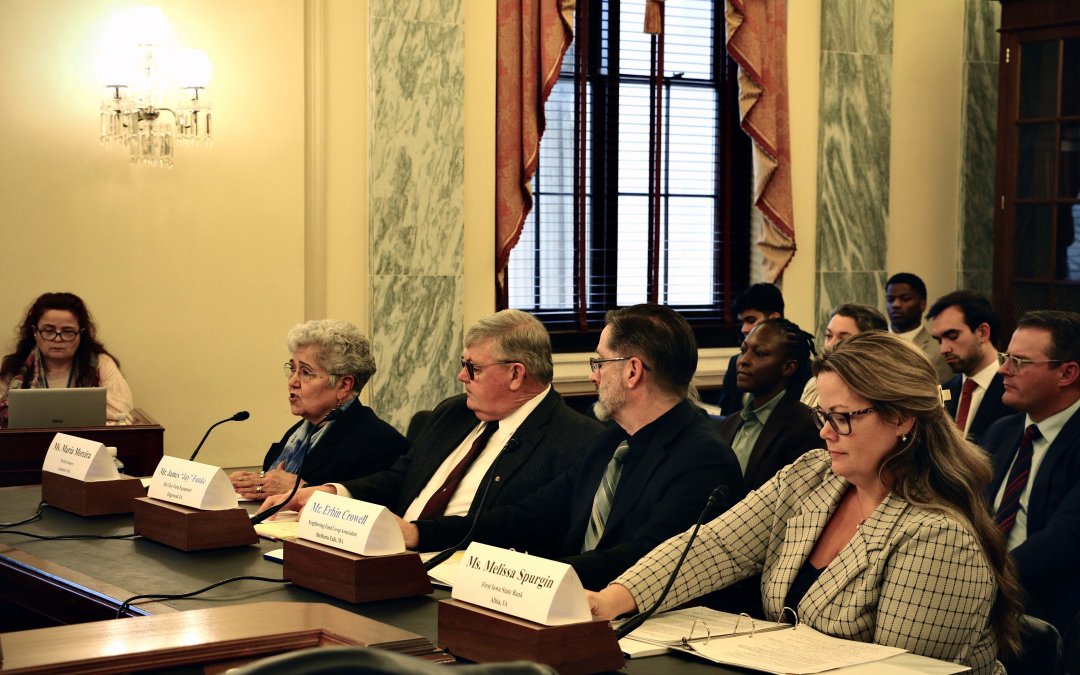
WASHINGTON — Witnesses from across the agricultural sector told senators that small and family farms play a critical role in feeding Americans but continue to face bureaucratic barriers and limited access to federal programs during a hearing to examine growth in the small business agricultural economy on Wednesday.
Members from both parties of the U.S. Senate Committee on Small Business & Entrepreneurship repeatedly emphasized the important role small farms play in the national food supply, noting that large-scale agriculture often focuses on commodities rather than direct food production. Witnesses agreed that while demand for food remains strong, growth for small agricultural businesses is constrained by regulatory complexity, access to capital and uneven federal support. Several described the current system as difficult to navigate, particularly for rural and first-generation farmers.
“You just have to change the system that everybody’s so used to, and they don’t want to change the system,” said witness Maria Moreira, board chair of World Farmers and vice chair of Rural Coalition.
Committee Chair Sen. Joni Ernst, R-Iowa, argued that small businesses make up the vast majority of employers nationwide and criticized what she described as regulatory hurdles facing rural producers. Complex requirements for the 7(a) loan program — the primary loan program from the Small Business Administration (SBA) — do not account for the unique needs and operations of rural small businesses, Ernst said.
Ranking Member Sen. Edward J. Markey, D-Mass., countered that rising grocery prices and affordability pressures are already straining both consumers and farmers.
“Trump keeps saying that affordability is a fake word, but it’s not a fake word for small businesses, not a fake word for consumers when something is up 3.1%,” Markey said.
Much of the hearing focused on the SBA and its role in supporting agricultural businesses. Melissa Spurgin, chief financial officer of First Iowa State Bank, told the committee SBA loan programs often involve repeated documentation requests, collateral rules and back-and-forth application processes that can delay access to credit.
Spurgin said many farmers face cash-flow timing mismatches that are not the result of an inability to repay loans, but of cycles that do not account for seasonal income patterns.
“Many rural businesses are asset-rich but cash-poor, with wealth tied up in land, equipment, or other assets accumulated over generations,” she added.
Erbin Crowell, executive director of the Neighboring Food Co-op Association (NFCA), which partners with local producers, emphasized the role of cooperatives in sustaining small farms.
“According to the U.S. Census Bureau, over the next 10 years, 40% of the U.S. population will reach retirement age and over half of small businesses are owned by this demographic,” said Crowell.
National trends already indicate an unfavorable landscape for small farmers. James F. Funke, sales manager for Del Clay Farm Equipment, described declining sales toward the end of 2025, noting losses reflected in income statements and growing caution among rural business owners.
Funke also said rising costs and limited economic opportunity have made agriculture less attractive to younger generations, contributing to declining population in rural areas.
The Food Procurement Act is a potential way to expand market access for small farms, said Sen. Markey. Small farmers often do not qualify for or gain access to existing federal procurement programs, he said.
In an interview with the Medill News Services, Maria Moreira said the new Dietary Guidelines for Americans, 2025-2030, are too recent for farmers to fully assess, but will be impactful.
“We’re trying to assess how we’re going to market the crops that our farmers produce,” she said.
The $1 billion cancellation of the Local Food Purchase Assistance Cooperative Agreement Program (LFPA) program by the U.S. Department of Agriculture last March is still being processed by small farmers, she added.
Small and mid-sized farmers lack access to the types of institutional purchasing channels that could be affected by guideline changes, making procurement reform an immediate concern, said Lorette Picciano, executive director of Rural Coalition.
Last month, the Trump administration announced $12 Billion farmer bridge payments for American farmers impacted by “unfair market disruptions.” However, these were specifically targeted to commodity growers while small to mid-scale farmers were also significantly impacted, said Moreira.